Coronary Heart Disease: Causes, Symptoms, and Prevention
Coronary heart disease, a term that often strikes fear into the hearts of those who hear it, is a complex and widely misunderstood condition. This...


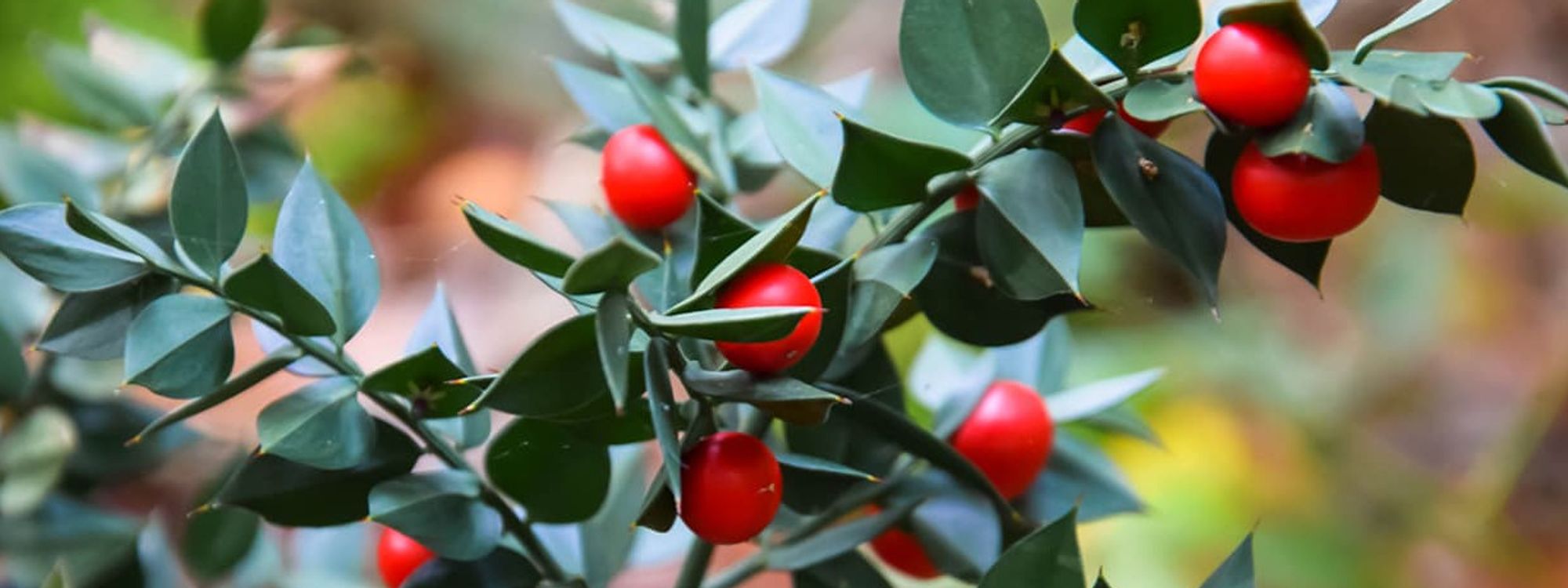
Ruscus Aculeatus, commonly known as Butcher's broom, is a plant with a rich history of use in traditional medicine. It belongs to the Liliaceae family and is native to Europe. The plant's roots and rhizomes are typically used in therapeutic applications, containing a variety of chemical constituents that contribute to its medicinal properties.
Ruscus Aculeatus, commonly known as butcher’s broom, contains a diverse range of bioactive compounds that underpin its traditional and studied uses in herbal medicine.
The most important constituents are steroidal saponins, particularly ruscogenin and neoruscogenin. These compounds are considered the primary active agents and are widely studied for their effects on blood vessel tone and vascular function.
The plant also contains flavonoids and polyphenols, which are known for their antioxidant properties. These compounds help protect cells from oxidative stress and may support overall vascular and inflammatory balance.
Additional constituents include phytosterols, which are structurally similar to cholesterol and may contribute to metabolic and cardiovascular support, as well as tannins, which have astringent properties and may support tissue tone.
Smaller amounts of essential oils and resins are present and may contribute to the plant’s overall biological activity. Furthermore, mineral salts, particularly calcium and potassium salts, are found in the rhizome and may play a supportive role in normal cellular and muscular function.
Together, these chemical compounds act synergistically and are believed to account for the therapeutic properties traditionally attributed to butcher’s broom, especially in relation to circulatory and vascular health.
Butcher’s broom has a long history of use in traditional and modern herbal medicine, mainly for its beneficial effects on the circulatory system. Its therapeutic value is primarily linked to its anti-inflammatory, anti-edema, and vaso-protective properties.
The plant is rich in steroidal saponins, notably ruscogenin and neoruscogenin. These bioactive compounds act on blood vessels by improving venous tone and reducing capillary permeability. As a result, butcher’s broom is commonly used to help manage:
Research suggests that the anti-inflammatory action of its saponins may be comparable to, and in some contexts stronger than, escin, the well-known active compound found in horse chestnut. This makes butcher’s broom a valuable botanical for conditions involving vascular inflammation and fluid retention.
Butcher’s broom is typically administered as:
Standardized extracts are preferred in clinical and supplemental use due to better dosage control and reliability.
In cosmetics and personal care, dry extracts of butcher’s broom are widely used for their vaso-protective and toning effects on the skin. These properties make it a common ingredient in formulations designed for:
The biological activity of Butcher’s broom is primarily linked to its anti-inflammatory, anti-edema, astringent, and vasoprotective properties. These effects are largely attributed to ruscogenins, the plant’s steroidal saponins, as well as its diverse flavonoid content.
Research has demonstrated that Butcher’s broom can support microcirculation, reduce capillary fragility, and decrease blood pooling in the lower limbs, largely through its venotonic activity. By strengthening vein walls and improving vascular tone, it helps prevent conditions associated with poor circulation, such as chronic venous insufficiency and varicose veins.
In addition, some studies have highlighted the potential of Butcher’s broom as a vasoconstrictor, suggesting that it could play a role in managing orthostatic hypotension—a condition characterized by a sudden drop in blood pressure upon standing. Although these findings are promising, further clinical trials are required to establish its efficacy and safety for this specific use.
Butcher's broom is recognized for its venotonic, vasoconstrictive, and microcirculation-protective properties, making it effective in managing venous disorders. It is officially approved for the treatment of conditions such as chronic venous insufficiency and hemorrhoids, as well as for alleviating associated symptoms including swelling, pain, itching, tingling, and leg cramps.
For therapeutic use, liquid extracts of Butcher's broom are commonly recommended, with doses standardized to provide approximately 7–11 mg of ruscogenins, the active compounds responsible for its pharmacological effects.
It is crucial to use preparations standardized for active ingredients, such as ruscogenins, to ensure consistent efficacy and safety. Non-standardized products may contain variable amounts of active compounds, potentially reducing effectiveness or altering expected outcomes. Additionally, patients with pre-existing conditions or those taking medications should consult a healthcare professional before initiating Butcher's broom supplementation.
In traditional herbal medicine, Butcher's broom is commonly used in combination with other plants to create preparations that promote diuresis (increased urine production). It has also been traditionally employed to help lower blood pressure, reduce edema (fluid retention), and support the management of kidney stones. The plant’s active compounds, primarily ruscogenins, are thought to strengthen blood vessel walls and improve circulation, which underlies many of its traditional uses.
In homeopathic practice, Butcher's broom is typically available as a mother tincture, granules, or oral drops. It is used to address conditions such as venous insufficiency, heavy or tired legs, edema, phlebitis (inflammation of veins), and other circulatory disorders. Homeopathic practitioners select the appropriate dilution based on individual patient symptoms and constitutional characteristics.
Butcher's broom is generally well-tolerated. However, in rare cases, individuals may experience gastric intolerance, including mild stomach upset or discomfort.
Contraindications:
Currently, there are no well-documented pharmacological interactions with Butcher's broom. Nonetheless, as with any herbal supplement, it is strongly recommended to consult a healthcare provider before starting treatment, particularly for individuals taking other medications or managing chronic health conditions.